
I am very excited to announce a new project that we will be involved with over the next couple of years:
http://youtu.be/dnRL1YXgP7Y
It's called Submerged TV, and it is a TV filming project focusing on sunken wrecks, underwater caves, and unusual extreme diving locations around the world. Our first filming project involves a cave location in our own back yard - Rick Springs in Logan Canyon, Utah. More to come soon on this.
In the meantime, please check out our launch trailer on our dedicated YouTube channel above!
Hope you enjoy it!
Regards,
Randy
Sunday, July 29, 2012


Friday, June 15, 2012
Is CCR diving less expensive than open circuit?
I have a lot of divers ask me if CCR is appropriate for them. Aside from the many benefits of CCR, ie. no bubbles, better underwater life interaction, warmer dives, improved decompression efficiency, longer bottom times, better streamlining, less weight, there is also one major advantage to CCRs over OC when doing deep Trimix Dives - PRICE!!!!

When doing deep technical dives, CCR really starts to shine with regards to expense especially when doing multiple dives. Can you imagine refilling all of these tanks between each dive with expensive helium based mixes and O2 based deco mixes. A typical 3 man deep team, can easily carry and use several hundred dollars worth of gases on each and every 100 meter plus dive, quickly making this a rich man's sport!
Although the initial investment in CCR diving can be steep - anywhere from $5000 to $15,000 depending on the unit, plus training expenses, over time the CCR will pay for itself several times over with gas saving alone!
These tanks shown above are simply bailout tanks for the team, and were only filled once and used over multiple days for 14 deep dives. The savings were exponential in comparison with what an OC diver would have spent! Better efficiency, comfort and cost savings to boot!
What's not to like!

Although the initial investment in CCR diving can be steep - anywhere from $5000 to $15,000 depending on the unit, plus training expenses, over time the CCR will pay for itself several times over with gas saving alone!
These tanks shown above are simply bailout tanks for the team, and were only filled once and used over multiple days for 14 deep dives. The savings were exponential in comparison with what an OC diver would have spent! Better efficiency, comfort and cost savings to boot!
What's not to like!
Wednesday, April 4, 2012
More time in Cave Country on my Hammerhead of course!
I had the opportunity of spending 10 days in Cave Country helping to teach another CCR Cave Course earlier in the month. With 3 CCR cave students, 2 Instructors and an Instructor Trainer, it was a large fun group! We spent a lot of time in the water and did some great dives! Lot's of time in Ginnie Springs, Little River and Peacock Springs!
 We did several long dives - 2hrs or more, and for a cave diving course, were able to help the students see parts of the caves that many seasoned OC cave divers rarely visit! We did have a few exciting moments, like when we did the Lips Bypass in the Devil's system. (Truly not recommended for CCR divers unless they happen to be diving sidemount CCR! ) July Springs was beautiful as usual, and the Hill 400-Rollercoaster circuit was lovely as always!
Mike Robinson (Utah) , Mats Ytterstad (Norway), and Doug Dobransky (Ohio) all passed and completed the course with flying colors!


Mike Robinson (Utah) , Mats Ytterstad (Norway), and Doug Dobransky (Ohio) all passed and completed the course with flying colors!
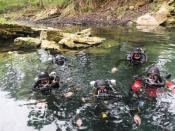
Had an awesome time with my oldest son Joshua and hanging with Phil Short. All in all, it was a great time and I can't wait to get back there again soon!
Sunday, March 4, 2012
CCR Trimix Training
Occasionally, I will repost a post I have made on one of the technical diving forums. In this case, this is from Rebreather World. The thread was a discussion about different training standards and methodologies. One of the participants in the thread made the comment:
"On top of that I do feel that if you are OC trimix trained, it seems rather ridiculous to be paying another $2000 or more (by the time you add up instructor fees, boat trips gas etc) to be able to use trimix with your unit. Seems like a good cash cow for the training agencies." Here is my response to his post: I just thought I would jump in here and offer a little insight as someone who sits on the training advisory panel of a major training agency. Offering a CCR Trimix cert is certainly not a "cash cow" for a training agency! Quite the contrary. At $15 per certification fee, it is without a doubt a money loosing proposition for any agency! The low numbers of these types of certs offered worldwide combined with the cost of development of the training materials, curriculum development, liability insurance, legal expenses to defend themselves from divers that cack themselves, marketing, etc. etc. all create an environment where a CCR Trimix course for a training agency is most definitely not a profit center. I don't mean to imply that training agencies are altruistic non-profit charities, however the upper level CCR courses are certainly not where they make their money! Believe it or not, it is not even a profit center for those of us that teach these kind of courses! It's much easier to make money cranking out OW divers dressed in pink split fins and snorkels! We teach advanced level CCR courses because we personally enjoy this type of diving, enjoy seeing other people learn how to do these types of dives safely, and enjoy the challenge of pushing the boundaries of technical/recreational diving. As to whether a CCR Trimix course is necessary for an OC Trimix training student - this age old argument will continue to rage on for the next several decades, or at least until helium prices make OC Trimix diving obsolete! My thoughts as an Instructor Trainer on both sides of the equation, is that "you don't know what you don't know". I don't believe I have ever had a CCR Trimix student that finished one of my upper level CCR courses that felt as though it was a waste of time. These courses are about a lot more than just the theoretical physics behind CCR Trimix. In addition to learning and practicing the "whys and how to nuts and bolts" of CCR Trimix, the student has the opportunity to be mentored and tutored by hopefully an experienced instructor in a safer environment than just "figuring it out on your own". You also hopefully establish a life long relationship with someone that you can return to with ongoing questions and mentoring. When you reach upper levels of CCR diving, it becomes quite lonely trying to find educated fellow divers to be able to have meaningful discussions about diving theory, practice and equipment! Of course, I guess you can always depend on RBW or other forums for this type of education!  If a CCR Trimix student comes away from the class having learned just one or two more helpful hints in keeping themselves alive in what is most certainly an extreme environment, the $2000 is most certainly well spent IMHO. I think the secret is to ensure that the student picks an instructor that is able to offer them a professional and enlightening ongoing experience! OK, now removing myself from my portable soap box! Safe diving to everyone, however you are trained! Warm regards, Randy |
Sunday, August 28, 2011
Open Water Divers in Caves
This spent this last week cave diving in Cave Country, Florida. I saw something at Ginnie Springs that was truly amazing! I am coming out of The Devil's Eye, when I notice that there are two open water divers down past the sign. To make maters even more amazing, they only had one light between the two of them, and to top it off, one of them was towing a float with a flag on it, attached to a long yellow nylon rope inside the cave! Wonders never cease to amaze me.
I escorted both of them out of the cave, took them to the surface and tried to explain to them just how dangerous their actions were. Their response to me was "It's OK, we're local!" Like this is some kind of excuse for dangerous behavior!
I escorted both of them out of the cave, took them to the surface and tried to explain to them just how dangerous their actions were. Their response to me was "It's OK, we're local!" Like this is some kind of excuse for dangerous behavior!
Sunday, July 10, 2011
Dive Addicts in Cozumel

Just returned from a great week of diving in Cozumel with 28 divers from Dive Addicts, www.diveaddicts.com
Even though this was just a recreational open water dive trip, we had a great time! We stayed at the Fiesta American, and all-inclusive resort located on the South end of town. The in-house dive operation, Dive House, did a great job, and we were very satisfied with the service and the level of the dive operation. The boats were large, spacious and comfortable with a covered roof for those of us that wanted a little protection from the sun.
The rooms were nice at the resort and the facilities were more than adequate. The large swimming pool was great for after diving relaxation, and the meals were pretty good as well.
The only complaint I really had during the week was the stinking mosquitoes! They were out in mass, and I came home with 53 mosquito bites that were just driving me crazy!
The diving was typical Cozumel drift style, with all dives being led by very competent dive masters. Of course, the beautiful walls and swim-throughs are always spectacular, and the underwater life was as good as I have ever seen it in Cozumel. I’m assuming that due to the currents, the fish and crustaceans grow to bigger than normal size. It seemed like almost every species we saw was enormous!

On our last dive of the trip, we had the opportunity to spend a couple of minutes with a giant Loggerhead turtle, which was the largest turtle I have ever seen underwater! It’s head was at least 12 inches across if not larger and its shell was at least 5 feet long or longer. It must have been very old, as its back was encrusted with barnacles and marine growth. The turtle must have been near blind as it kept swimming and bumping into us!
Great trip. Cozumel as usual was pretty decent diving! Easy to get to, and the price tag for the week was less than a thousand dollars including lodging, food and diving. Not bad!
Thursday, June 16, 2011
Interesting Deep Saturation Diving Project in New York City
Thought you might enjoy this article in the New York Times about work on the New York City water system:
http://www.nytimes.com/2008/11/23/nyregion/23tunnel.html?pagewanted=all
(Thanks to Eric Dasque for the link! www.thinkingdiver.com)
http://www.nytimes.com/2008/11/23/nyregion/23tunnel.html?pagewanted=all
(Thanks to Eric Dasque for the link! www.thinkingdiver.com)
Saturday, June 11, 2011
U-534 German WWII U-boat
Fascinating story about the U-534 a WWII German U-boat sunk by the Australian Air Force.
http://sixtyminutes.ninemsn.com.au/classicvids/8231644/classic-from-the-deep
Enjoy!
http://sixtyminutes.ninemsn.com.au/classicvids/8231644/classic-from-the-deep
Enjoy!
Sunday, May 22, 2011
Diving in Palau May 8, 2011
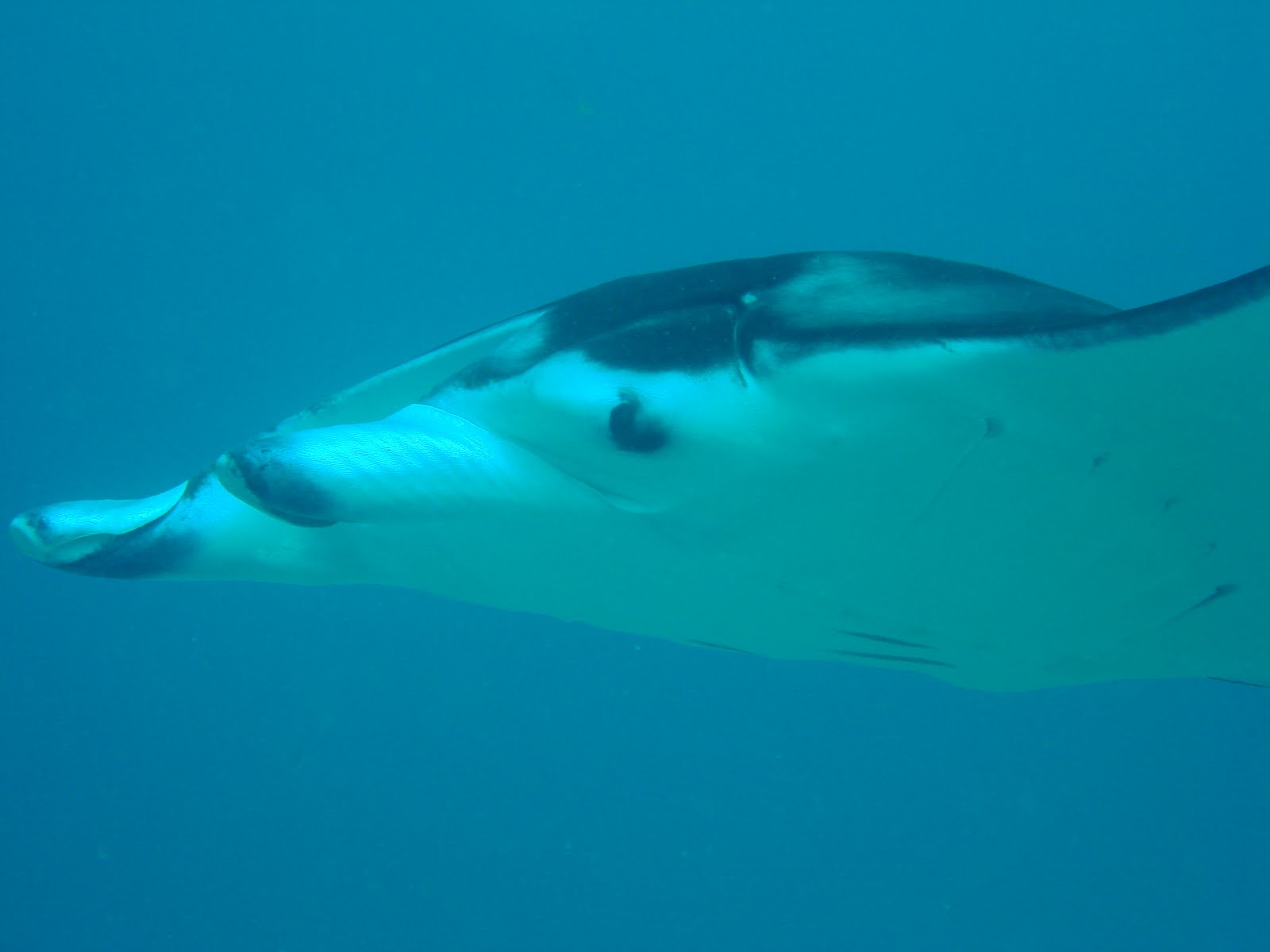
Ripping currents, loads of fish including manta rays, turtles, sharks, Napoleon wrasse, tuna, barracudas, jacks and other large fish, provided continuous entertainment on most of the 25 dives that we did that week, aboard the Palau Aggressor. The topside islands, true to their reputation, are one of the most beautiful sites on earth. They look like someone dropped dark green dumplings in a perfectly clear and still blue ocean. We saw literally hundreds of small-uninhabited picture perfect islands that pock mark the Philippine Sea.
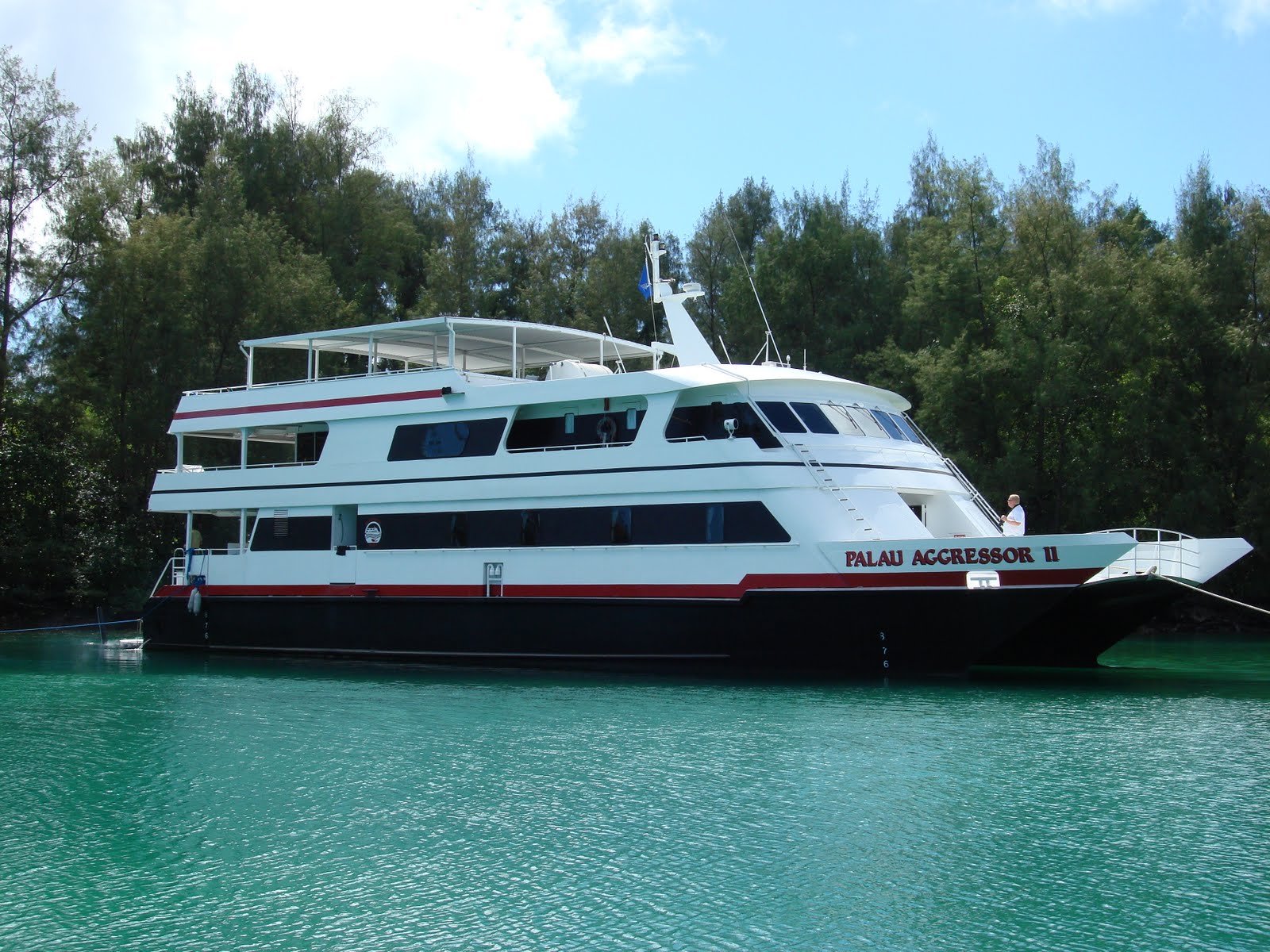
Gwen and I spent the week of May 8th doing up to 5 dives per day, on a very well run live-a-board. The Palau Aggressor is a catamaran that is very stable as well as spacious. The crew was top notch and ran the boat without any hitches. The chef was from NYC and did an excellent job in continuing to surprise us with amazing food at each meal.

The diving was very good, maybe not the very best that I have done, but very good nonetheless. The most exciting dives of the week were usually the channel dives where there was a ripping current that attracted the large pelagics. We would typically swim as a group to the staging area where we would hook into the reef with the supplied reef hooks and wait for the action to start. A few times we got skunked, but more often than not, we had a great show! Due to the ever changing currents and the fact that we were typically drift diving, the entire boat usually dived as one large group or two smaller groups. If I had any one complaint, it would be that diving as a large 16-person group can get a little tedious, however the advantage of diving from a live-a-board far outweighs the problems with a crowd. Although most of the sites would have been easily accessible from one of the numerous day boats that ply their trade in the area, the advantage of the live-a-board is that you don’t spend long trips on small boats all day long.
Blue Corner, Big Drop Off, Peleliu Corner, and German Channel were some of the best sites of the week, with the most action!

We also did a 3-hour land tour in Peleliu, which was fascinating! We saw lots of WWII relics including a Japanese and American tank, as well as Japanese gun placements. We saw Orange Beach where 3000 US servicemen lost their lives trying to make their way to shore. The Japanese were entrenched in over 600 caves on the island, and what was supposed to be a quick 3-day process to secure the island, ended up taking 78 days and was one of the bloodiest battles of the war. A very sobering site and one that I will not forget soon!
Gwen and I shared the boat with 14 other divers who were all Russians from Moscow. This was an experience in and of itself! The Russian divers were a hardy bunch, but also in typical Russian fashion spent much of each night drinking vodka and Jack Daniels and smoking cigars! Probably not an ideal combination for diving, but they seemed to have amazing stamina!
Diving in Palau is something that everyone should experience at least once in their lifetime. Unique and beautiful scenery both above and below the water!
Wednesday, March 23, 2011
Advanced Trimix Training at Lake Mead

This past weekend, Josh and I were at Lake Mead, outside of Las Vegas training a group of divers in an Advanced Trimix class and another group finishing up their Advanced Nitrox and Decompression Procedures. We had a great time, with the exception that I managed to get all the way down there and forgot my dry suit! I had to have it flown down on Delta! What a pain the rear!
Water temp was 54 degrees at the surface and 52 at depth. Nice brisk dive! We were very lucky with the weather. We had very windy evenings and were afraid that we were going to get blown out a couple of times, which wouldn't have been the first time at Lake Mead!
We had a great time with the group which consisted of Richard Lamb, Amy Smith, Jack Weimer and Jeannie Weimer who all completed their Advanced Trimix and Todd DuLaney and Ray Kovuisa who completed their Adv. Nitrox and Deco Procedures.

This is a picture of Ray's special super hero Finish Rubber Man Suit! All one piece, it made underwater communications take on a whole new meaning with his rubber mittens! You can see Jack standing next to Ray is concerned about something!
Saturday, February 5, 2011
Cave Country right after Christmas

I had an absolutely wonderful time! Diving anytime with my boys is a great experience, but also being challenged both physically and mentally, made for memorable experiences! I saw parts of Ginnie Springs that I had never been in previously, including a beautiful little syphon that was absolutely gorgeous! We did the Grand Traverse from Orange Grove to Peacock 1, several long traverses in Ginnie, and had a good long swim in Little River. Over all, we spent about 20 hours underwater that week, and really had a great time!
As usual, Phil puts on a very demanding course and I went to bed each night dead dog tired! Of course, I always enjoy diving with my boys and we had some very memorable experiences. 8 straight days of fairly aggressive cave diving, and I was about ready for a day or so rest! At least I was pretty much able to keep up with them. The old man hasn't completely lost it just yet!
By the way, did I mention that it was stinking cold? It was only 18 degrees the first night we arrived!
I'm looking forward to getting back down there again in April for some more cave diving!
Sunday, November 21, 2010
Papua New Guinea with Dive Addicts
Papua New Guinea November 3rd-17th, 2010
Traveling from Draper, Utah to Papua New Guinea is one of the more horrendous travel experiences I have personally had. 2 ½ days of full on travel with overnights in Brisbane, Australia and Port Moresby, PNG (the murder capital of the world!), somewhat lively discussions with Air Nuigini personnel over weight restrictions, very tired travelers, and stiff muscles, but all was forgotten about by the time we finally rolled into Walindi Resort in Kimbe PNG. With friends and loved ones asking us if we needed our head examined, we were determined to make it to one of the premier dive destinations on the planet! We actually were returning to the site of a pervious Dive Addicts trip aboard the Star Dancer, a luxury liveaboard that calls Kimbe PNG home. Our trip in 2007 was an amazing experience, and this trip lived up to our expectations!
After a nice lunch at the Walindi Resort, we boarded the Star Dancer to find that she had undergone a retrofit since our last trip in 2007. New ownership and a new captain were a welcome relief and the crew commanded by Christopher Guglielmo a native Floridian by way of several years in the Turks and Caicos, assisted by Yuki Kawamura, a young Japanese girl who served as Trip Director and Dive Master, as well as several PNG locals, the boat was in tip top shape and ran extremely efficiently and comfortably. The food was top notch and plentiful. Captain Christopher is a world-class underwater photographer and was very helpful at assisting and giving helpful hints to guests when requested.
Our Dive Addicts group consisted of 10 people including Randy & Gwen Thornton, Doug & Carrie Larson, Alex Miller & Andrea Kelly, Doug & Amy Smith, and Mike & Nikki Robinson. Our itinerary included Kimbe Bay, Witu Islands and Fathers Islands. PNG offers a wide variety of animal encounters with the widest variety of bio-diversity found on earth. One of the most exciting adventures for new divers coming to PNG is the small critters found on the “muck dives”. Muck dives in PNG consist of diving in usually dark sand from the many local volcanoes. Found amongst the rumble, palm fronds, coconuts, and various and assorted trash on the bottom, you can find some of the coolest small unusual creatures found anywhere. Pipe Fish, Leafy Ghost Fish, Leafy Scorpion Fish, Mandarin Fish, Mantis Shrimp, Decorator Crabs, Twin Spotted Gobies, Blue Ring Octopus, Unidentified Ringed Octopus, Enormous Sea Cucumbers, numerous Nudibranchs of all types shapes, sizes and colors, Hermit Crabs, Upside Down Jelly Fish, Boxer Crabs, Moray Eels of several variety, Twin Spotted Lion Fish, Ornate Ghost Pipe Fish, Blue Ribbon Eel, Rock Moving Wrasse, Juvenile Spotted Sweet Lips, Flamed Colored Dart Fish, Bi-Colored Dart Fish,
Our diving on the bommies included lots of sitings of Bump Head Parrot, Napoleon Wrasse, Silver Tip Shark, White Tip Shark, Grey Reef Shark, Squid, Cuttle Fish, Spiny Devil Fish, Lion Fish, as well as all of the usual suspects.
We participated in a couple of different shark feeds and got up close and personal with a gaggle of White Tips and Grey Reef Sharks who were not shy about getting right up in your face.
Papua New Guinea is a photographer’s and videographer’s paradise. There is something virtually on every dive to grab your attention and challenge your skills! The water temperature during our 8 days was a balmy 87 degrees Fahrenheit! Many of the guests went without wetsuits or skins and simply dove with a rash guard. The water conditions ranged from raging current to virtually no current in bathtub type conditions. We dove on mostly bomies (sea pinnacles) in the mornings and in the afternoon and nights mostly in more protected sites. The dive masters were top-notch young PNG local boys who were able to pick out even the smallest creatures who us mere mortals were oblivious to!
While in the Walindi Islands, we had the chance to visit a local village. A guy named Dicki, who has lived on the island for 45 years running a Copra plantation, took us through the local village and introduced us to the folks there. Most of the adults were up the hill at their garden spot while the kids were home mowing the lawns with bush-whackers, a large machete type knife. The kids were unbelievably sweet and followed us around posing for pictures and smiling from ear to ear. They were thrilled to practice their English. Each island has its own unique language that is unintelligible to the people on the islands next door. In PNG there are over 867 unique languages with Pidgin the common language spoken throughout PNG as well as a fare amount of English. There are over 50 political parties and no one prime minister has lasted their entire 5-year term. Indigenous counting systems are more than 50. One counting system is based on the joints of the body and nose!
The people of PNG are generally quite pleasant and friendly, with the notable exception being the hoodlums who run around Port Moresby. Once out of Port Moresby, the people were always excited to see us. There are still quite a bit of territorial village/tribal protectionism. Apparently, the week before we arrived, a group of 6 men were hacked to death when their boat ran out of gas and they washed up on the shore of a non-friendly competing village. The villagers didn’t appreciate the intrusion and hacked them with bush-whackers!
On several of the dives, upon surfacing, we would find young kids in dugout canoes with outriggers, wanting to trade flowers, fruit and vegetables for soap, rice, or other staples. They would float for several hours behind the boat until the cook would come out and do a little “business” with them! They also love to get their pictures taken and grin from ear to ear!
While diving the pinnacles in Fathers Islands, we were hosted by a resident 5 foot long Great Barracuda by the name of George, who is very photogenic! In fact, so close that you get an up close and personal view of his nasty dental work!
One evening after completing a night dive, we were greeted at the hang bar by several large Silver Tip Sharks that were quite interested in checking us out. Made for a few anxious moments during the safety stop!
Interestingly enough, PNG has experienced a bit of an El Niño year, and so there has been a small amount of coral bleaching, but they seem to be recovering nicely. One cool photography opportunity of the warm water is that occasionally you will see an ultra white bleached sea anemone that makes for a striking photographic opportunity. According to Captain Christopher over 60% of all species of the world’s coral is found in PNG with an incredible amount of endemic fish.
The Star Dancer holds 16 guests, and Dive Addicts had 10 of the spots. This was our 2nd time onboard for this itinerary, and this particular crew was a huge improvement over the previous experience! The diving, accommodations, food, service and sites were certainly worth the effort to get here and I would highly recommend it to anyone who is looking for something a little off the beaten path! The travel home was a little tedious and included 3 flight cancelations and lots of sitting around in the Hoskins airport which certainly gives a whole new meaning to airport services! I now refer to the Hoskins airport as Hoskins Prisoner of War Camp! One small hint - don’t even think about opening the door to the restrooms! It was a near death experience! Air Niugini is not Delta by any means, but we made it safely and I would gladly return to PNG again!
Sunday, October 17, 2010
Eurotek 2010
October 16, 2010 -
Just finished attending the first day's sessions. The biggest problem was trying to decide which of the many sessions to attend. As they run 4 concurrent sessions each time slot, it made for some difficult choices!
So far, here are the presentations I attended:
Leigh Bishop gave a very interesting presentation about Carl Spencer's unfortunate death on the Britannic Expedition 2010.
Dr. Simon Mitchell gave a very informative presentation on decompression sickness including in-water decompression.
Antti Apunen & Janne Suhonen shared incredible photographs and spoke about The Molnar Janos Cave System beneath the city of Budapest.
Phil Short spoke about CCR safety and design parameters.
Jill Heinerth gave an amazing presentation on Blue Hole exploration in the Bahamas.
We have a formal dinner and awards show tonight.
The show has been a blast for me so far. I anxious to see and hear more tomorrow!
October 17, 2010
Another great day of presentations at Eurotek 2010!
Started off with a very interesting presentation by Barry McGill & Ian Lawler entitled “Misadventure, Minefields and U-boats – the deep wreck of Donegal.” I’m very jealous that they have some many incredible targets just off their backyards!
Carl Douglas gave a presentation called “Baltic Ghost Ships – Shipwreck Discoveries in the Baltic Sea”. This was absolutely one of the highlights of the weekend for me. Incredible photography and video of shipwrecks in the Baltic. Amazing viz, ships from the 1600s to modern, and some of the most spectacular images I have every seen. The wrecks are in pristine condition. I really want to visit this place!
Tomaz Stachura gave a cool` presentation on “Graf Zeppelin, Nazi Aircraft Carrier, expedition 2009” Another amazing dive in the Baltic Sea! Looks like I am going to have to book a trip there soon!
Watched a half hour film by Edoardo Pavia on a recent expedition to Truk Lagoon. Shot in Hi Def video, the videography was very impressive!
Phil Short presented, “Cave Diving Adventures – one man’s worldwide cave diving exploits”. Once again, Phil convinced us that he is certifiable! Even though I have heard the story before, his tale about being trapped underwater in Swindon’s hole, is enough to raise your blood pressure!
Agnes Milowka regaled us with tales of “Cave Diving Down Under – a Look at Cave Diving in Australia” Amazing that such a skinny young girl has added so much new line in so many locations around the world! Very entertaining!
We had a formal dinner last night with black tie and the whole bit! Good food and an entertaining time. The Brits really know how to put on a good show. Well organized, and top notch presentations. Mostly Europeans, but there were also people from OZ, USA, South America, Russia, Eastern Europe, etc. etc. As I mentioned earlier, the biggest challenge was just trying to decide which presentations to attend, as they had multiple ones going at the same time!
Definitely worth the trip over!
Just finished attending the first day's sessions. The biggest problem was trying to decide which of the many sessions to attend. As they run 4 concurrent sessions each time slot, it made for some difficult choices!
So far, here are the presentations I attended:
Leigh Bishop gave a very interesting presentation about Carl Spencer's unfortunate death on the Britannic Expedition 2010.
Dr. Simon Mitchell gave a very informative presentation on decompression sickness including in-water decompression.
Antti Apunen & Janne Suhonen shared incredible photographs and spoke about The Molnar Janos Cave System beneath the city of Budapest.
Phil Short spoke about CCR safety and design parameters.
Jill Heinerth gave an amazing presentation on Blue Hole exploration in the Bahamas.
We have a formal dinner and awards show tonight.
The show has been a blast for me so far. I anxious to see and hear more tomorrow!
October 17, 2010
Another great day of presentations at Eurotek 2010!
Started off with a very interesting presentation by Barry McGill & Ian Lawler entitled “Misadventure, Minefields and U-boats – the deep wreck of Donegal.” I’m very jealous that they have some many incredible targets just off their backyards!
Carl Douglas gave a presentation called “Baltic Ghost Ships – Shipwreck Discoveries in the Baltic Sea”. This was absolutely one of the highlights of the weekend for me. Incredible photography and video of shipwrecks in the Baltic. Amazing viz, ships from the 1600s to modern, and some of the most spectacular images I have every seen. The wrecks are in pristine condition. I really want to visit this place!
Tomaz Stachura gave a cool` presentation on “Graf Zeppelin, Nazi Aircraft Carrier, expedition 2009” Another amazing dive in the Baltic Sea! Looks like I am going to have to book a trip there soon!
Watched a half hour film by Edoardo Pavia on a recent expedition to Truk Lagoon. Shot in Hi Def video, the videography was very impressive!
Phil Short presented, “Cave Diving Adventures – one man’s worldwide cave diving exploits”. Once again, Phil convinced us that he is certifiable! Even though I have heard the story before, his tale about being trapped underwater in Swindon’s hole, is enough to raise your blood pressure!
Agnes Milowka regaled us with tales of “Cave Diving Down Under – a Look at Cave Diving in Australia” Amazing that such a skinny young girl has added so much new line in so many locations around the world! Very entertaining!
We had a formal dinner last night with black tie and the whole bit! Good food and an entertaining time. The Brits really know how to put on a good show. Well organized, and top notch presentations. Mostly Europeans, but there were also people from OZ, USA, South America, Russia, Eastern Europe, etc. etc. As I mentioned earlier, the biggest challenge was just trying to decide which presentations to attend, as they had multiple ones going at the same time!
Definitely worth the trip over!
When the team is in Sync!
Doing technical dives, as a team can be one of the most rewarding experiences as a diver. This is especially true when the team members are in sync with each other and have the same goals, equipment configurations, and safety and communications protocols.
I have the fortunate advantage of being able to dive quite frequently as part of a 3-man team consisting of my two sons and myself. Josh, Michael and myself are experienced cave, wreck and CCR divers. All 3 of us are technical dive instructors or instructor trainers and have on “most days” very similar philosophies about diving in general. All of my kids, having grown up in a “diving household” were part of the nightly diving discussions (sometimes arguments) that took place around the dinner table, and from a very early age were keenly aware of team diving protocols! This made for some lively discussion and testing of dad’s opinions!
As soon as the boys were old enough to start actively taking part in technical diving, I was acutely aware of my wife’s determination that we as a team return from our crazy adventures with the same team members with which we left the house. If something were to happen to one of the boys, I might as well not come home!

Now as adults, Josh and Michael give me a serious run for my money! Long gone are the days when dad dictates to the young boys what profiles and procedures we will be following. Since these days we typically dive as a CCR team, our team activities include prepping and testing our rebreathers to make sure that they work as advertised! Some of the prep will include making sure that the units are set up identically with gas selections, decompression algorithms, gas fills, bail out options, fresh batteries, O2 cells that are working properly and especially making sure that all of our equipment is rigged similarly and is in 100% working order. Due to the fact that all 3 of us dive the same CCR rigs, we are more closely able to help monitor and keep an eye on each other during the dive. It’s kind of funny sometimes to look at underwater pictures of us, because its often difficult to tell who is who! (Although if you look closely, you can usually tell which one is me, because I have a little better form!:) )
Prior to any “big” dives, we spend a lot of time as a team discussing our safety protocols, rigging our equipment in the desired fashion and practicing our individual and team procedures in an environment as close as possible to the target environment. We practice these team procedures over and over again until we feel comfortable that we are as prepared as possible for both planned and unplanned events. We spend a lot of time talking about “what ifs” and practice our responses to such events. One of the interesting things about practicing all of these “what ifs” is that it seems to makes us more aware of potential problems and as a team we seem to do a reasonably good job of avoiding the problems to start with, simply because we become more aware of them!

Underwater communication because extremely critical when diving as a team. Due to the fact that we have been diving as a unit for many years, we clearly have a substantial advantage. Even though most of our signals are fairly standard cave diver and decompression diver signals, we still spend time before each dive reviewing our communication protocols. Our underwater team communication actually starts above water. Part of our pre-dive planning includes substantial discussion about the goals of the dive, the profiles and any unique procedures pertaining to that particular dive. Underwater, is not the time to be figuring out these types of things! We typically spend a lot more time discussing and planning our dives than we do actually executing the dives. That is all just part of the fun!
After each of our dives, we will hold a post dive debriefing, where each of the team members will take the opportunity to review how the dive went and offer suggestions on how to improve our team efforts.
Even though we are all high spirited and competitive individuals, when it comes time to operate as a CCR team, there is no messing around. We take our diving seriously, and even though we have a lot of fun, our goal is to pull each dive off with a precision that enhances our safety and effectiveness. Believe me when I say that if any one member of the team deviates from the plan, you definitely hear about it from the other two members! I have on a few occasions had to suffer through a tongue lashing from Josh and Michael when they felt I had not followed the plan with precise exactness!

Saturday, September 11, 2010
Ricks Spring Cave - Logan Canyon, Utah
This past Monday, Richard Lamb and I did a quick dive at Ricks Springs Cave. It had been almost a year since I was up there last, so I was anxious to get back in there and see how things were looking. Being a sidemount dive, I was diving steel 85s and Richard had steel 95s.

As usual, the water was VERY cold, about 39 degrees or so! The weather was great, just staring fall weather, but beautiful! We left the dive shop about 7:30 AM and arrived at the cave about 9:30. We had a bit of an audience when we got up there, with lots of people asking us questions like: "Is it dark in there, and is the water cold?".
We prepped our gear, and started the dive. The entry way was clear and the flow was not too bad. I was wearing a new dry suit, which I apparently cut the neck seal a little too much, and so I suffered a flooded suit. By the time we were about 30 mins. into the dive and back at the second air space, I was so cold that I had to call the dive! By the time we made it out of the cave, I was really chilled! The top of my head was so cold, I couldn't feel a thing! Completely numb! I was quite hypothermic and really struggled even getting my gear off. In fact, Richard had to help me remove my fins!
All in all, it was a beautiful dive, albeit cold! I had a great time, and about 2 1/2 hours later, by the time we made it back to Dive Addicts, I was actually almost warmed up! What we won't do for a little adventure!

Sunday, August 1, 2010
A Legend has been lost
This past week, we spent the entire week in Cave Country cave diving and having fun with the family. We took all 3 of our kids and their spouses, (well a fiance in one case) as well as our 2 grandkids. While we were there, we were able to attend the memorial service for Wes Skiles who died while on a fairly benign dive in 70 feet of clear blue sea water in Boynton Beach, Florida. He was on a video shoot for National Geographic, and apparently wasn't involved in anything too strenuous or challenging during the dive. He was diving a CCR unit, but little is known about what went wrong at this point.
The entire dive community was in shock, and there was an immediate outpouring of condolences from around the world. Additionally, tech divers everywhere were stunned that Wes Skiles, one of the original and best known cave divers of all time, could suffer such an unlikely accident.
For those of us who dive CCR units, this was a severe dose of reality. If it could happen to Wes, it could certainly happen to anyone! Unfortunately, as is the case with most of these types of accidents, it is unlikely that the entire story will be made known. Either due to lack of information, or reluctance to speak publicly about well known figures, the information surrounding the cause of death is rarely made public. The one thing that does happen however, is that hopefully many of us to stop and consider our own diving practices, and hopefully recommit ourselves to ensuring that we are safeguarding our own fragile lives.
When we dive, especially technical dives, we are placing ourselves in a harsh unforgiving environment. Hopefully, Wes' unfortunate death will serve as a reminder to all of the rest of the technical diving community, that none of us are above having things go wrong. I know that I will approach my personal diving with a renewed commitment to ensuring that I prepare and execute every single dive as though it is the most important one I will ever make.
Wes Skiles was an incredible underwater explorer, diver, cave diver, underwater photographer, underwater videographer and environmental advocate for the planet. It is a huge loss for the diving community that he has left us this early, but his presence will long be felt and experienced through those in the diving community that he has touched. The close to a 1000 people that showed up to Wes Skiles' memorial service is a small testament to how many people he influenced with this photos, videos and infectious enthusiasm for life.
Sunday, June 27, 2010
More CCR pics

Michael, Randy & Josh Thornton prepping for a Trimix dive on the wall in Grand Cayman May 2010.

Josh and Michael doing their pre-breath!

Plenty of CCR units headed for a deep dive!

Randy, Michael & Josh doing deco after a dive on the Carrie Lee in George Town Harbor
Sunday, June 20, 2010
Eagles Nest - a Fairly Serious Dive in Cave Country!

I was diving a 10/60 mix at a set point of 1.2. Even though I choose to dive OC in some cave diving situations, Eagles Nest is in my opinion, a dive that is more conducive to CCR. It's a very deep, large wide open cave with variable conditions that are effected by the tides. (Even though you won't find salt water in the cave, the tidal exchange will completely affect the viz from day to day.) We did a nice long dive with a total run time of 3 hours and 10 mins.
Although Eagles Nest is also the perfect cave in which to use a scooter, we chose to swim this time around. We dove the Upstream section and swam to the 1000 feet mark, which even though it doesn't sound like much, when you are swimming at 270 feet, a 1000 feet in and a 1000 feet back out is a pretty good work out! It took us 41 mins. to hit the 1000 feet mark where we turned the dive. at about 43 mins., I started to notice that I was getting a fair amount of water in the loop. I emptied it several times over the next few mins., but I kept getting more and more water! Thankfully, the Hammerhead is extremely flood resistant and tolerrent, and I knew that I could deal with a fair amount of water. Over the shoulder counter lungs and the radial scrubber that sits on top of a sizable spacer, combine to make for a substantial safety margin when it comes to water trapping.
When you are 40 mins. back in a cave at 270 deep, about the last thing in the world you really want to do is to test out your bailout planning efficiency! I was pretty confident that I was packing sufficient bailout, but not real excited about testing out my theory! Consequently, I was determined to complete the dive on the loop if at all possible. Because my buddy was on OC, I really wasn't too excited about having to share air with him if it turned out that my bailout was not sufficient, so I had even more motivation to stay on the loop as long as possible!
My work of breathing became a little more difficult as a portion of my scrubber became wet, but again due to the scrubber design, it was still functional. I just had to slow down a little bit so as not to over breath the scrubber at that point. A slight adjustment to my normal cave diving trim also helped keep the water out of the scrubber.
3 hours and 10 mins. later, I completed my deco and with a HUGE smile on my face surfaced still on the loop! When I later cleaned my unit, I found a couple of liters of water in both counter lungs, and in the canister. Never once did I even taste a hint of caustic cocktail. I was actually quite surprised at the volume of water!
So the big question that is now going through my mind is "Did I really have enough bailout? Given that I was diving with an OC buddy that really wouldn't have been in a position to do "team bailout", should I have staged more bailout then what I did?" I think the answer is that even though I theoretically had plenty of bailout, in this particular buddy team situation, one CCR and one OC, I will error on the side of extreme caution in the future. When I'm cave diving with my two sons on CCR, we dive as a team and carry loads of bailout between the team. When diving with an OC buddy, this type of dive does not lend itself to team bailout practices.
The conclusion I have come to is that I will be staging more bailout than my planning requires when doing a deep cave dive with an OC buddy. Although the Hammerhead is extremely flood tolerant, I will be hedging my bets in the future! A flooded CCR in a deep cave is a CCR divers worst nightmare! When in Cave Country I will occasionally see CCR divers way back in caves with nothing more than a couple of aluminum 40s. I wonder what would happen if they had a CO2 hit, or a flood and actually had to make it back out on these little tanks in what would surely be a very stressful situation? A little scary in my mind!
By the way, once I realized that I was taking on water, neither me or my buddy could figure out where it was coming from. After the dive, I noticed that it was coming from a slit in my mouthpiece. A simple problem that caused my a bit of concern during the dive!
Dive safe everyone!
Saturday, May 22, 2010
Just finished up InnerSpace 2010
I'm in the Atlanta airport on my way home from InnerSpace 2010. We had a great time, and I had a fantastic time diving with my two sons. We had spent a significant amount of time preparing for the week, working and drilling on our team diving procedures, and it paid off! The week went smoothly with no problems and we finished off the week with a dive to 352 feet at Texas Hole. Photos courtesy of Doug Ebersole.

It is amazingly peaceful to do a deep dive on the Cayman walls, especially when you and the rest of the team are in synch! After nine days in a row of deep dives together, we really were working well together. Our equipment configurations were working well and it was awesome exploring the incredibly beautiful vertical walls.
 Thursday we dove the Carrie Lee, a wreck that sits in the sand on the edge of the wall in George Town with the bow sitting in about 280 feet. We dove down to about 330 feet and then came back up the wall underneath the bow. It was a very cool dive! Very pretty looking up the wall and seeing the bow hanging over the edge.

On Wednesday, we had a really funny thing happen during one of the dives. We were coming up the wall from quite deep and when we saw another diver on an Inspiration hunched over and very still on the wall at about 280 feet. I watched him for a few seconds and when he wasn't moving, I became concerned and swam over to him to see what was going on. I floated over the top of him and it appeared that the skin on the top of his head was loose and flowing back and forth in the slight current. Obviously, this was quite concerning, and I couldn't figure out what on earth was going on. I wiggled his arm to get his attention, and he looked up and he had a Halloween mask pulled over his head! I certainly didn't see that coming! Even on serious Trimix dives, divers are stilling having fun!

If you haven't been to InnerSpace before, it is definitely worth a try! It's just plain fun hanging out with other CCR divers with similar interests all week!

It is amazingly peaceful to do a deep dive on the Cayman walls, especially when you and the rest of the team are in synch! After nine days in a row of deep dives together, we really were working well together. Our equipment configurations were working well and it was awesome exploring the incredibly beautiful vertical walls.


On Wednesday, we had a really funny thing happen during one of the dives. We were coming up the wall from quite deep and when we saw another diver on an Inspiration hunched over and very still on the wall at about 280 feet. I watched him for a few seconds and when he wasn't moving, I became concerned and swam over to him to see what was going on. I floated over the top of him and it appeared that the skin on the top of his head was loose and flowing back and forth in the slight current. Obviously, this was quite concerning, and I couldn't figure out what on earth was going on. I wiggled his arm to get his attention, and he looked up and he had a Halloween mask pulled over his head! I certainly didn't see that coming! Even on serious Trimix dives, divers are stilling having fun!

If you haven't been to InnerSpace before, it is definitely worth a try! It's just plain fun hanging out with other CCR divers with similar interests all week!
Thursday, May 20, 2010
One more day of InnerSpace 2010!
This week has been an incredible experience. 9 days of deep technical CCR dives and interesting seminars every night. Sitting around between dives chewing the fat with some of the who's who in the industry has really been just a blast. And to make it even more fun, I've been able to dive with both of my sons on each dive.
We have spent quite a bit of time this winter discussing and practicing our team diving skills and procedures, and I think the time has paid off. Josh and Michael are already excellent divers and diving with them as a 3 man team has been a great experience.
The weather has been on again and off again raining then sunny, but we have not had any dive called due to weather. Most of the dives have been between 300-330 feet, and we have really had a great chance to put the Hammerheads through the paces. Haven't had a single problem with them.
Cayman is a great place with for this kind of stuff, and everyone in attendance has been very friendly and open for discussions about CCRs and tech diving in general. It's been great to rub shoulders with some very experienced guys and listen to their thoughts on various things. Dive Tech has done an amazing job of keeping up with 64 CCR divers! The logistics much just be overwhelming!
We dove today at a place called Hepp's wall and a dive site called "Funky Town". We entered a tunner/cave/swim through at 180 and exited on the reef at 290 feet and kept going down the reef till 312. Incredibly quite and beautiful and relaxing!
We have spent quite a bit of time this winter discussing and practicing our team diving skills and procedures, and I think the time has paid off. Josh and Michael are already excellent divers and diving with them as a 3 man team has been a great experience.
The weather has been on again and off again raining then sunny, but we have not had any dive called due to weather. Most of the dives have been between 300-330 feet, and we have really had a great chance to put the Hammerheads through the paces. Haven't had a single problem with them.
Cayman is a great place with for this kind of stuff, and everyone in attendance has been very friendly and open for discussions about CCRs and tech diving in general. It's been great to rub shoulders with some very experienced guys and listen to their thoughts on various things. Dive Tech has done an amazing job of keeping up with 64 CCR divers! The logistics much just be overwhelming!
We dove today at a place called Hepp's wall and a dive site called "Funky Town". We entered a tunner/cave/swim through at 180 and exited on the reef at 290 feet and kept going down the reef till 312. Incredibly quite and beautiful and relaxing!
Subscribe to:
Posts (Atom)